
Your Home Can Do More Than Use Energy.
It Can Help Power Texas.
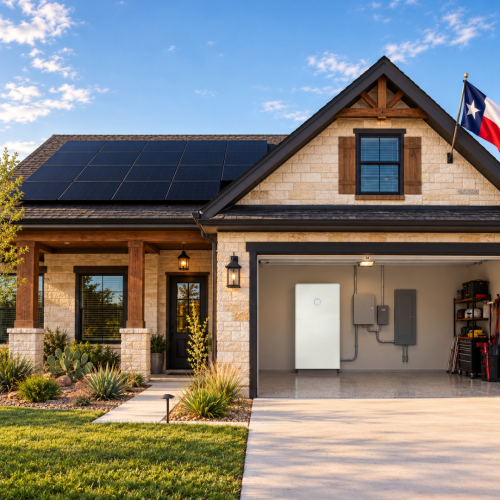
Solar + Battery Storage is Changing the Way Texas Powers Its Future
Texas is experiencing rapidly growing electricity demand, while solar and battery storage are becoming increasingly important resources for the state’s electric grid.
A solar energy system paired with battery storage can help you produce electricity, store it for later, keep essential appliances running during an outage, and—when enrolled in an eligible grid program—potentially become part of a larger network of distributed energy resources supporting grid reliability.
Your home. Your energy. A stronger Texas grid.
What is a Virtual Power Plant?
A Virtual Power Plant (VPP) is not a traditional power plant.
Instead, it is a network of smaller energy resources—such as home batteries, solar systems, EV chargers, smart thermostats and other connected devices—that can be coordinated together to provide valuable energy and grid services.
The U.S. Department of Energy describes VPPs as aggregations of distributed energy resources that can collectively provide services similar to a traditional power plant.
Think of it this way:
One battery = energy for your home.
Thousands of batteries working together = a significant grid resource.
When individual systems are connected through appropriate technology and programs, they can potentially respond to grid conditions by changing when they consume, store or provide electricity.
That is why the idea of a Virtual Power Plant is becoming increasingly important as Texas’ electricity demand grows.


Why Solar Alone Isn't the Whole Story
Solar generates the most electricity when the sun is shining. But Texas homes often continue using significant amounts of electricity after the sun begins to set. That’s where batteries become particularly valuable.
The EIA reported that during summer 2025, batteries in ERCOT supplied an average of approximately 4 GW during the 8 p.m. hour, when solar production was declining.
This creates an important relationship: Solar generates energy → Battery stores energy → Battery can deliver energy later. That ability to shift energy from one part of the day to another is one of the reasons solar + storage is becoming increasingly important to grid planners.
From Your Rooftop to the Texas Grid
A typical solar + battery system can work throughout the day:
1. Solar produces electricity
Your solar panels generate electricity during daylight hours.
2. Your battery stores energy
Instead of using all of that energy immediately, excess solar production can be stored in your battery for later use.
3. Your home uses stored energy
Your battery can provide energy when solar production decreases, such as in the evening.
4. Backup power can keep essential loads running
When properly designed and configured, solar + battery systems can provide backup power during a grid outage.
The Department of Energy notes that solar panels alone generally cannot provide power during a grid outage because they are designed to shut down when the grid goes down. Properly configured storage and inverter equipment are needed for solar-plus-storage backup operation.
5. Connected systems can support the larger grid
When eligible distributed energy resources are aggregated and coordinated through an appropriate program, batteries can potentially provide grid services.
DOE specifically identifies behind-the-meter batteries and solar-plus-storage systems as resources that can be aggregated into VPPs.


Texas' Energy Needs Are Growing
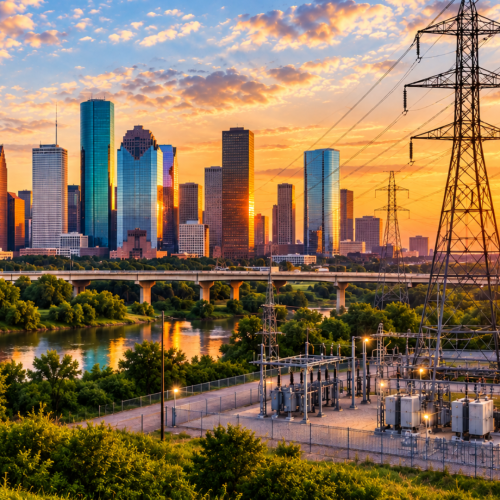
Texas has one of the largest and fastest-growing electricity systems in the United States.
ERCOT manages the flow of electricity for approximately 90% of Texas’ electric load, overseeing more than 55,000 miles of transmission lines.
Electricity demand in ERCOT has been increasing substantially. According to the U.S. Energy Information Administration, ERCOT electricity demand increased 5% during the first nine months of 2025 compared with the same period in 2024, reaching a record level for that period.
At the same time, Texas continues to add solar and battery resources.
ERCOT’s 2025 annual report states that from 2021–2025, approximately:
- 31,000 MW of solar
- 16,000 MW of battery storage
- 10,000 MW of wind
- 5,000 MW of thermal generation
were synchronized to the ERCOT grid.
What does that mean for homeowners?
It means the way Texas produces, stores and uses electricity is changing.
And home energy storage can become part of that transition.
Texas' VPP/Ader Development
Texas isn’t waiting for the concept of virtual power plants to become a reality.
ERCOT and the Public Utility Commission of Texas have been developing the Aggregate Distributed Energy Resource (ADER) Pilot Project to evaluate how multiple distributed energy resources can participate in the ERCOT wholesale market. ERCOT defines an ADER as multiple individual metered sites connected at the distribution level that can respond collectively to ERCOT instructions.
The pilot is designed to explore questions including how aggregated distributed resources can:
Support grid reliability
Improve energy-market participation
Provide grid services
Improve load management
Potentially reduce the need for some transmission and distribution investments
Encourage investment in distributed energy resources
And the program is growing.
In March 2026, ERCOT increased the ADER pilot’s registered capacity limit from 200 MW to 500 MW, while maintaining a 100 MW ancillary-services limit. That doesn’t mean every Texas homeowner can automatically enroll their battery in a VPP.
It does demonstrate that Texas is actively developing the infrastructure and market framework needed to use distributed energy resources as grid assets.
What Does a Solar + Battery System Mean for Your Home?
Energy Independence
Generate and store more of your own electricity instead of relying entirely on the grid.
Backup Power
A properly designed battery system can keep selected essential loads powered during an outage.
Store Your Solar
Capture excess solar energy during the day and use it later.
Manage Energy Use
Battery storage can give homeowners more control over when they use energy from the grid.
Support a Stronger Grid
Eligible connected systems can potentially contribute to broader demand-response and distributed-energy programs.
Support Texas’ Energy Future
Solar and storage add flexible energy resources close to where electricity is being consumed.
DOE identifies VPPs as a way to improve grid flexibility, resilience and reliability while integrating distributed resources such as rooftop solar and batteries.
Build Your Texas Energy System With ES Solar
At ES Solar, we believe your solar system should do more than produce electricity.
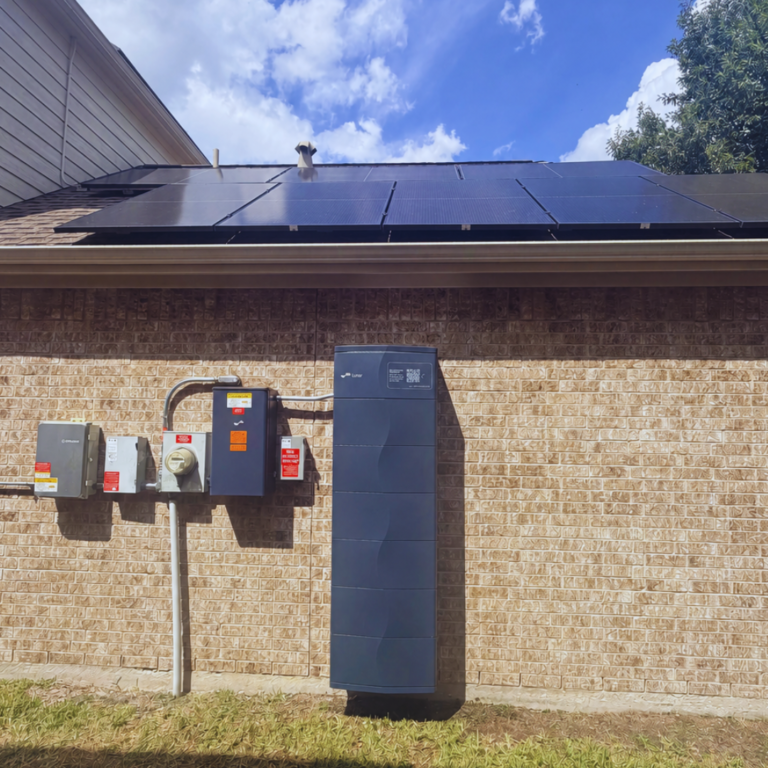
A properly designed solar + battery system can give homeowners: Solar production + energy storage + backup capability + greater energy control
Our approach is designed around the complete energy system—not simply installing panels on your roof.
